Sienna’s story
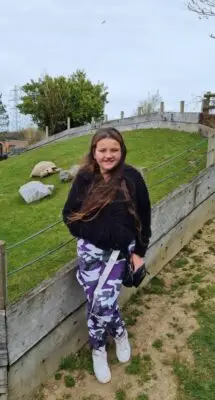 Hi, I’m Sienna.
I have had Type 1 diabetes since I was 10 years old, and this September will mark five years since I was diagnosed.
I have decided to share my story because I want other people with Type 1 diabetes to know that you are never alone, and it’s okay not to have all the answers.
Before I was diagnosed with Type 1 diabetes, I remember going to the toilet much more often than I used to and drinking a lot more water over the course of a couple of days. I was also losing a lot of weight very quickly, but I didn’t understand what was happening to me.
The night I went into hospital is something I remember very clearly. It was September 2021, when COVID was still around, and to be honest, I thought I had caught it.
I remember feeling very unwell that day, so I didn’t go to school. My mum bought KFC for all of us as a treat. I used to love KFC, but that day I could barely eat any of it before being sick.
Because I was so ill, my mum wanted me to sleep in her room, so I did.
It got to around 11 p.m. when I told my mum, “There’s something wrong. I can’t breathe properly.”
We went straight to A&E.
Everything happened so quickly. There were so many nurses around me, and I remember them trying to find a vein, but they just couldn’t. I also remember everyone being shocked that I didn’t react to them putting so many needles into me as they tried different places to get an IV in.
At the time, I didn’t really understand how serious things were. I just knew that something was very wrong.
When we got to A&E, my mum told the triage nurse that she suspected I had diabetes.
The thing is, my mum didn’t really know anything about diabetes at the time. She had never had to learn about it or deal with it before.
But just a few weeks earlier, a new charity had been set up by a friend of one of my nan’s friends, after she sadly lost her son from a DKA (Diabetic ketoacidosis) DKAis a life-threatening emergency where a severe lack of insulin forces the body to break down fat for energy. This creates toxic acids called ketones that poison the blood. My mum had heard about it and, although she didn’t know much about Type 1 diabetes, something she had heard about it had stayed in her mind.
She told the triage nurse that she thought I might have diabetes.
They did a finger-prick blood test, and that confirmed that my blood sugar was in the 30s. That was when everything suddenly became much more urgent.
They rushed me into a bed so they could take blood, start giving me insulin and fluids, and try to get my blood sugar down.
Looking back, I think about how important that moment was. My mum didn’t have the medical knowledge to know what was happening, but she remembered something she had heard just weeks before and she trusted her instinct that something wasn’t right. I want this to be well known, this saved me.
At the time, I still didn’t fully understand what was happening. I knew I was very unwell, but I don’t think I understood just how serious it was or that this was the beginning of me being diagnosed with Type 1 diabetes.
I remember being given a yellow blanket and being told it was a special one. Honestly, it was the most comfortable blanket I have ever had in a hospital.
I also remember being taken through the underground tunnels to the ICU ward. I was terrified, especially because I remember seeing spiders and being so scared of them.
I had so many IVs attached to me. I even had one in my foot, which was probably one of the most uncomfortable things ever.
I hated being stuck in bed. I wasn’t allowed to do anything by myself, and everyone was constantly trying to stop me from getting out of bed.
The funny thing was, even though I was incredibly ill, I still had so much energy. I just wanted to get up and go outside.
I remember having wires coming from both of my arms and my foot, while the nurses were constantly trying to stop me from getting out of bed on my own.
I just wanted to go to the toilet or have a little walk. I remember thinking, “What are you doing? I’m fine!”
Looking back now, I obviously wasn’t fine.
Those two days felt like the longest two days of my life.
Eventually, I was moved to a different ward, and that was where I met my nurse, Stacey, for the first time.
There was so much information for me to learn and understand, but Stacey believed in me. She always has. She became one of my biggest supporters, and I will never forget that.
When I was moved to Island Ward, my mum kept buying me loads of toys. Being 10 years old, I was so happy about the toys, but I had absolutely no idea how much my life was about to change.
Once I was more stable, the next part of my journey began: learning how to live with Type 1 diabetes.
We had training on every aspect of diabetes. There was so much information to take in, and it felt like everything was happening at once.
My mum had to learn how to inject me and understand how to manage my insulin. I had to start learning about food, carbohydrates and carb counting, and how all of this affected my blood sugar levels.
There were so many new things to remember. Insulin, injections, blood sugar checks, carbohydrates, counting carbs and understanding what my body needed. It all seemed like so much at the time.
One minute I had been a normal kid who didn’t really think about any of these things, and suddenly diabetes was something I had to think about every single day.
I was still trying to process the fact that I had Type 1 diabetes while also being expected to learn how to manage it.
Looking back now, I realise just how much my mum and I had to take in during such a short space of time. We were learning something that would become part of our everyday lives, even though neither of us had been prepared for it.
Eventually, after a long week, I got to go home.
My whole family was waiting for me at home with gifts and flowers. My nan gave me the biggest hug, and I will never forget the look on her face when she saw that I was okay.
It was one of those moments that stays with you forever.
But going home didn’t mean everything went back to normal.
I couldn’t return to school straight away. A meeting had to take place before I could go back, so that everyone could understand what I needed and how my diabetes would be managed while I was there.
My mum had to manage coming into school around lunchtime to give me my insulin injection until i was offered the Medtronic pump in July 2022. It was strange having something so personal become part of my school day, and I suddenly needed extra support with things I had never had to think about before.
I also had to learn how my CGM worked and understand what the readings meant. I needed to know what to do if my blood sugar went too low and I was having a hypo, as well as what to do when my blood sugar was going too high.
There was so much to learn, and I was trying to take all of it in while also trying to return to some kind of normal life.
Going back to school wasn’t simply about walking back through the doors and carrying on where I had left off. Everything had changed, and I was having to learn how to manage my diabetes while also being a student and trying to feel like myself again.
When I finally returned, I went into my class and my Year 6 teacher made me stand up in front of everyone and tell them that I had Type 1 diabetes.
Suddenly, I had so many questions being thrown at me.
The problem was, I didn’t know the answers either.
I had only just been diagnosed. I was 10 years old. I was still trying to understand what Type 1 diabetes even was, and people expected me to explain it to them.
I remember feeling overwhelmed and eventually freaking out.
For months, I heard comments like, “You got it because of your weight.”
That wasn’t true.
I even had someone ask me if my insulin pen was a vape.
After hearing so many comments and dealing with so many misunderstandings, I decided to start hiding my Type 1 diabetes.
I thought that if I hid it, the comments would stop. I thought I could just live my life without people knowing.
I hated hearing the words, “You have diabetes.”
So when I started high school, I continued hiding it.
For years, I didn’t want anyone to know. I didn’t want questions. I didn’t want people making assumptions. I didn’t want to have to explain something that I was still learning to understand myself.
I have also had some really difficult experiences with teachers and diabetes.
There have been times when my blood sugar was high or low and I had to walk around the school trying to find a teacher who was “trained” to help me.
Even now, after having Type 1 diabetes throughout my entire time at school, I still get asked if I need insulin when my blood sugar is low, or if I need sweets when my blood sugar is high.
It is so annoying.
But more than anything, it shows me just how little understanding there still is about Type 1 diabetes.
Through all of this, though, there has always been one person beside me.
My mum
From the very beginning, she has been there through absolutely everything. From that first night in hospital to every day since, she has never stopped supporting me.
She has been there for the “Give insulin now, Sienna” moments, especially when I’ve been too ashamed to give myself insulin in front of other people. She has been there when I’ve been scared, frustrated, angry or overwhelmed, and during the moments when diabetes has felt like too much.
She is always the one there in the middle of the night, looking after my blood sugars. Whether I need extra insulin or I need sweets because my blood sugar has gone low, I know she is there.
She really is my biggest supporter.
But now, as I go into Year 11, I am done hiding my Type 1 diabetes.
I’ve learnt how to inject myself. I’ve learnt how to carb count, how to put a sensor on myself and how to use an insulin pump. I’ve used the Medtronic pump, and now I use my Life- changing pump. I’ve had to learn so much over the years, and there are still things I’m learning every day.
But when I look back at the little girl who went into hospital in September 2021 not knowing what was happening to her, I realise just how far I’ve come.
I’m no longer ashamed of my diabetes.
I’m proud of how much I’ve learnt. I’m proud that I can look after myself. I’m proud of how far I’ve come.
Most importantly, I’m proud to say that I have Type 1 diabetes — and I’m not hiding it anymore.
For years, I saw it as something I needed to hide.
Now, I see it as a part of who I am.
Type 1 diabetes has played a huge part in making me the person I am today. It has made me stronger, more independent and more aware of things that I never would have had to think about otherwise.
But being strong doesn’t mean that it is easy.
People with Type 1 diabetes have to do things every single day that our pancreas should be doing automatically.
We have to think about whether we have enough insulin. We have to think about our blood sugar. We have to make sure we have sweets with us in case we go low. We have to constantly make decisions that most people never even have to think about.
And we have to do all of that while still going to school, seeing friends, doing homework, playing sports, going out and living our lives.
It’s not fair that we still have to deal with comments like, “Stop eating sugar and you’ll be fine.”
Because it truly doesn’t work like that.
Type 1 diabetes is not caused by eating too much sugar, and it isn’t something that can simply be fixed by changing what you eat.
That is why I think it’s time for change.
More people need to be educated about what Type 1 diabetes actually is and, importantly, what the symptoms are.
Knowing the symptoms of Type 1 diabetes can save lives. It certainly could have changed how ill I became before I was diagnosed.
If you are experiencing symptoms like extreme thirst, needing to urinate frequently, unexplained weight loss, extreme tiredness, or becoming seriously unwell, please don’t ignore them. Knowing the signs and getting medical help can make a huge difference.
I am not sharing my story because I have all the answers.
I’m sharing it because I know what it feels like to be 10 years old, confused, frightened and suddenly expected to understand something that is going to affect you for the rest of your life.
I know what it feels like to want to hide.
But I also know what it feels like to have people beside you who believe in you.
So, if you have Type 1 diabetes, or you are struggling with something that makes you feel different, please remember:
You are never alone.
Type 1 diabetes does not define who you are.
But it can make you stronger, more independent and more resilient than you ever realised you could be.
And it’s okay not to have all the answers.
You’re still learning.
Just like I am.